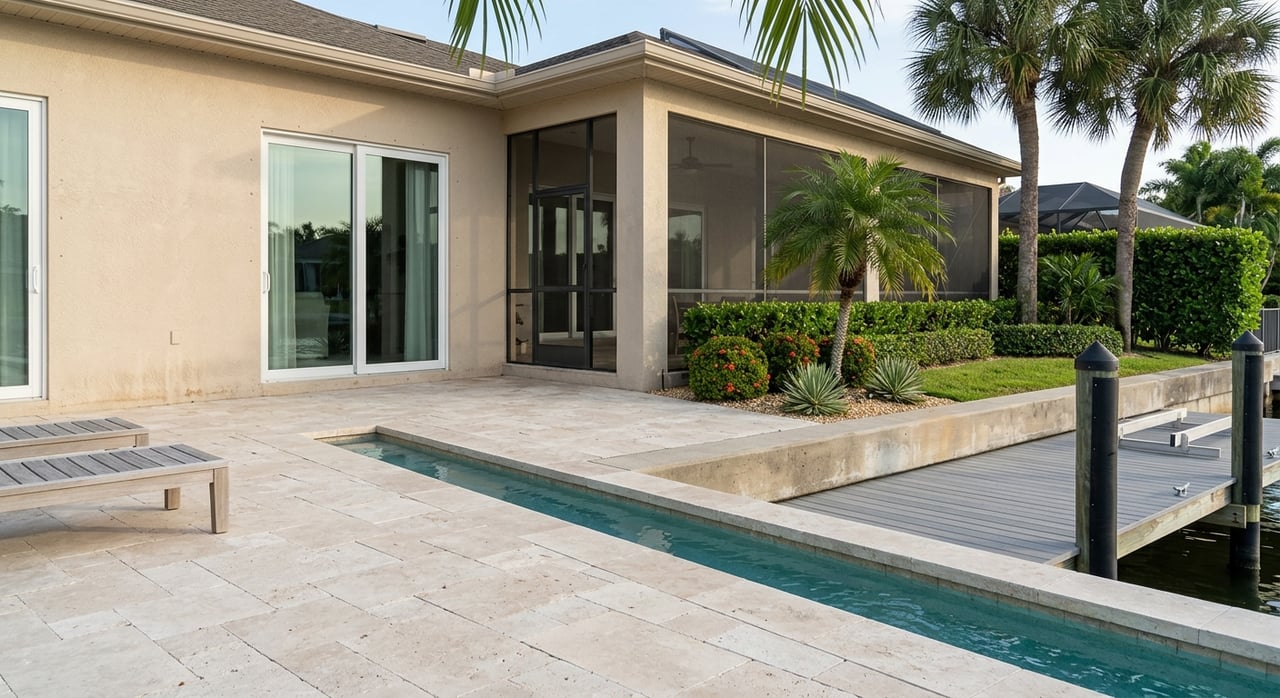
Dreaming about a Venice waterfront home? The view is only part of the story. If you are buying on the water in Venice, Florida, you also need to understand flood exposure, boating access, shoreline rules, and insurance before you fall in love with a property. This guide will help you focus on the details that matter most, so you can buy with more clarity and confidence. Let’s dive in.
Why Venice waterfront homes vary so much
Not all waterfront property in Venice offers the same lifestyle or ownership experience. The city includes Gulf frontage, inlet-adjacent property, Intracoastal Waterway homes, bay-front settings, canal-front homes, and creek or river locations tied to places like Roberts Bay, Curry Creek, Hatchet Creek, and the Myakka River.
That matters because each waterbody can affect your view, boating route, dock needs, and storm exposure. A home on a canal may feel very different from one near the Gulf or along the Intracoastal Waterway, even if both are described as waterfront.
Venice also has a strong connection to the water through local public access points and recreation areas. Venetian Waterway Park runs along both sides of the Intracoastal Waterway, and Marina Park and Higel Marine Park offer public boat launches.
Start with the exact waterbody
Before you evaluate finishes, square footage, or even price, identify exactly what kind of waterfront setting you are buying. This is one of the most important first steps because the waterbody shapes both lifestyle and long-term property considerations.
Ask whether the home is on the Gulf, near the inlet, on the Intracoastal, on a bay, on a canal, or along a creek or river. Each option can come with different water depths, traffic patterns, wind exposure, and travel times to open water.
For boaters, inlet access is especially important. Venice notes that the South Jetty helps stabilize the entrance to the Intracoastal Waterway and protect inlet access, which shows how important that route can be for getting out on the water.
Understand flood zones and storm surge
Flood risk in Venice is not a simple yes-or-no issue. The city uses FEMA flood maps and identifies several flood designations, including A, AE, VE, X-shaded, X, AO, and Coastal A Zone areas.
It is also important to know that flood zones and evacuation levels are not the same thing. Venice specifically reminds residents that evacuation levels are based on storm-surge zones, which can create confusion for buyers who assume one map tells the whole story.
A property can have a certain flood-zone designation and still raise separate questions about storm evacuation planning. That is why you should review both flood mapping and local evacuation context during your search.
Venice also participates in the Community Rating System, which can reduce National Flood Insurance Program premiums by 25 percent. That does not eliminate flood risk, but it can affect your long-term ownership costs.
Check docks, lifts, and shoreline permits
If a waterfront home already has a dock, lift, seawall, bulkhead, or revetment, do not assume everything is fully transferable or easy to replace later. In Sarasota County, the Environmental Protection Division reviews and issues permits for docks, boat lifts, personal watercraft lifts, rock revetments, bulkheads, and maintenance dredging.
The county uses different permit paths depending on the work. Some projects fall under general permits for repair or replacement, some under minor-work permits for new docks and modifications, and others under major-work permits.
This matters because what looks like a routine update after closing may require more review than you expect. If a structure is damaged, outdated, or not ideal for your boat, your future options may depend on county and state approvals.
Questions to ask about existing structures
When you tour a Venice waterfront property, ask for as much documentation as possible on any water-related improvements. A careful paper trail can save you time, money, and frustration later.
Use this checklist as a starting point:
- Was the dock, lift, seawall, or shoreline structure permitted?
- Has any part of it been repaired, replaced, or modified?
- Is there a record of maintenance dredging?
- Has the seller shared permit history from Sarasota County?
- Are there known restrictions on future expansion or rebuilding?
Look closely at boating practicality
A home can look perfect from the patio and still be a poor fit for your boating needs. If you plan to keep a boat at home, practical access matters just as much as the address.
Focus on the basics:
- Water depth at low tide
- Lift capacity
- Route to open water
- Bridge or inlet constraints
- Whether the property has a private dock or relies on public launch access
Venice’s Marine Unit patrols the Intracoastal Waterway and Gulf waters up to nine miles offshore. Sarasota County also sits within the state’s manatee-protection framework, which can affect how you use local waterways.
If a home does not have a private dock, that does not automatically make it a poor choice. Marina Park and Higel Marine Park both offer public boat-launch access, which may work well depending on how often you boat and what kind of setup you prefer.
Know when coastal rules may apply
Some waterfront properties near the beach or shoreline face an extra layer of review. Florida’s Coastal Construction Control Line program and Sarasota County coastal setback rules can affect what can be built, repaired, or replaced.
The county also notes that work seaward of setback lines may require state, federal, and other local permits. In practical terms, you should never assume that a dock, lift, or shoreline improvement can be rebuilt the same way after closing.
This is especially important if you are buying for long-term use and want flexibility later. The best time to understand those limits is before you own the property, not after a storm or major repair need appears.
Review shoreline condition and maintenance
Shoreline care is about more than appearance. In Florida, erosion can be driven by tropical storms, boat wakes, and sea level rise, so the type and condition of the shoreline deserve careful attention.
Some homes have hardened shorelines such as seawalls or bulkheads. Others may have a living shoreline or no formal stabilization at all.
A living shoreline can be a lower-impact alternative to a seawall or bulkhead. As a buyer, it helps to know which approach the property uses because future maintenance, permitting, and cost can look very different.
Signs to look for on site
You do not need to be an engineer to spot useful clues during a showing. A few visible details can tell you a lot about how the shoreline has been managed.
Watch for:
- Cracks, leaning, or separation in seawalls or bulkheads
- Signs of erosion near the water’s edge
- A buffer area between lawn and water
- Native or low-maintenance plantings near the shoreline
- Areas that look recently patched after storm damage
UF/IFAS guidance for waterfront landscaping recommends a 6- to 10-foot buffer between the lawn and the water, with little or no fertilizer or pesticide use in that zone. That buffer can be a useful sign that the shoreline has been managed with water quality and erosion control in mind.
Be careful with mangroves
If mangroves are present, treat them as a serious diligence item. Florida regulates mangrove trimming and alteration, and some work may require a permit or a professional mangrove trimmer.
The state also protects rooted mangrove propagules. That means you should not assume you can simply clear back shoreline vegetation to improve your view or expand access.
For some buyers, mangroves are part of the appeal of a natural shoreline. For others, they may change maintenance expectations. Either way, it is best to understand the rules before you close.
Separate homeowners and flood insurance
Insurance is one of the biggest decision points in any Venice waterfront purchase. Homeowners insurance and flood insurance are separate conversations, and both need your attention early in the process.
Florida’s consumer office says most flood insurance policies are underwritten by the National Flood Insurance Program and are generally separate from homeowners coverage. Flood coverage may be added by endorsement or written as a stand-alone policy.
If the home has a federally backed mortgage and sits in a high-risk zone, flood insurance is required. Venice also notes that its Community Rating System participation can reduce NFIP premiums by 25 percent.
Questions to ask your insurance team
Do not stop at the monthly premium. Ask for the full coverage picture so you know what you are really buying.
Important questions include:
- What are the wind deductibles?
- What are the flood deductibles?
- Are attached and detached structures treated differently?
- What exclusions apply?
- How do elevation, proximity to water, construction method, and rebuild cost affect pricing?
Florida’s consumer office notes that all of those factors can influence flood insurance cost. On a waterfront home, that pricing can vary from one property to the next more than many buyers expect.
Watch the timing before closing
Insurance timing matters. Flood policies commonly carry a 30-day waiting period, so this is not something to leave until the last minute.
If the property may be insured through Citizens, ask early about flood requirements and documentation. Citizens says most new and renewing personal residential policies with wind coverage must maintain flood insurance under a phased schedule through January 1, 2027.
Citizens also notes that properties older than 20 years may need a four-point inspection during the application process. Its policies do not cover flood or storm-surge loss, which makes it even more important to line up complete coverage before closing day.
A smart Venice waterfront checklist
Buying waterfront property in Venice works best when you evaluate the home as a full package, not just a beautiful lot with water behind it. The right purchase is the one that fits how you want to live, boat, insure, and maintain the property over time.
Before you move forward, make sure you have clear answers to these points:
- The exact waterbody and type of frontage
- Flood-zone designation and storm-surge evacuation context
- Dock, lift, seawall, or shoreline permit history
- Boating depth, route, and access constraints
- Whether county or state review may affect future improvements
- Current insurance options, costs, and waiting periods
When you take the time to review these details up front, you put yourself in a much stronger position to buy confidently and avoid expensive surprises later.
If you are exploring waterfront homes in Venice and want steady, local guidance through the details, Bobbie Leahey and the Florida Living Team are here to help you make sense of the options and move forward with confidence.
FAQs
What should you check before buying waterfront property in Venice, Florida?
- You should confirm the exact waterbody, flood-zone designation, boating access, permit history for docks or shoreline structures, and insurance options before closing.
How do flood zones affect Venice waterfront homebuyers?
- Flood zones can affect insurance requirements and costs, but they are different from storm-surge evacuation levels, so you need to review both.
Can you rebuild a dock or seawall on a Venice waterfront property?
- Not always in the same way, because Sarasota County and, in some cases, additional coastal rules may require permits or approvals for repairs, replacement, or modifications.
What if a Venice waterfront home does not have a private dock?
- It may still work well for you if your boating habits fit nearby public launch access such as Marina Park or Higel Marine Park.
Do you need separate flood insurance for a waterfront home in Venice, Florida?
- Yes, flood insurance is generally separate from homeowners insurance, and homes with federally backed mortgages in high-risk zones are required to carry it.
Why do mangroves matter when buying waterfront property in Venice?
- Mangroves are regulated in Florida, and trimming or alteration may require permits or a professional mangrove trimmer, so they can affect your future shoreline plans.